How much does a complete dental implant cost?

The cost of a complete dental implant in the USA varies greatly dependingdental implant cost-10 year guarantee on implants on the material, dentist, region and the complexity of the dental implant procedure. On average, the cost of a single implant, including the implant, abutment and crown, is between 1,800 USD and 4,000 USD. This price range includes all necessary steps such as preliminary examinations, the surgical procedure and the placement of the crown. Additional costs may be incurred for bone grafts or other necessary procedures.
How much are teeth implants in Hungary?

The implants themselves cost 670-1020 USD at a Hungarian dentist, depending on the brand, but 1000-1500 USD with the intermediate element and the structure. We have several clinics in Hungary and can perform all kinds of dental treatment. The indicated treatment and material prices depend on the brand, quality, type of materials used and the location of the clinic. Read more about affordable dental clinics

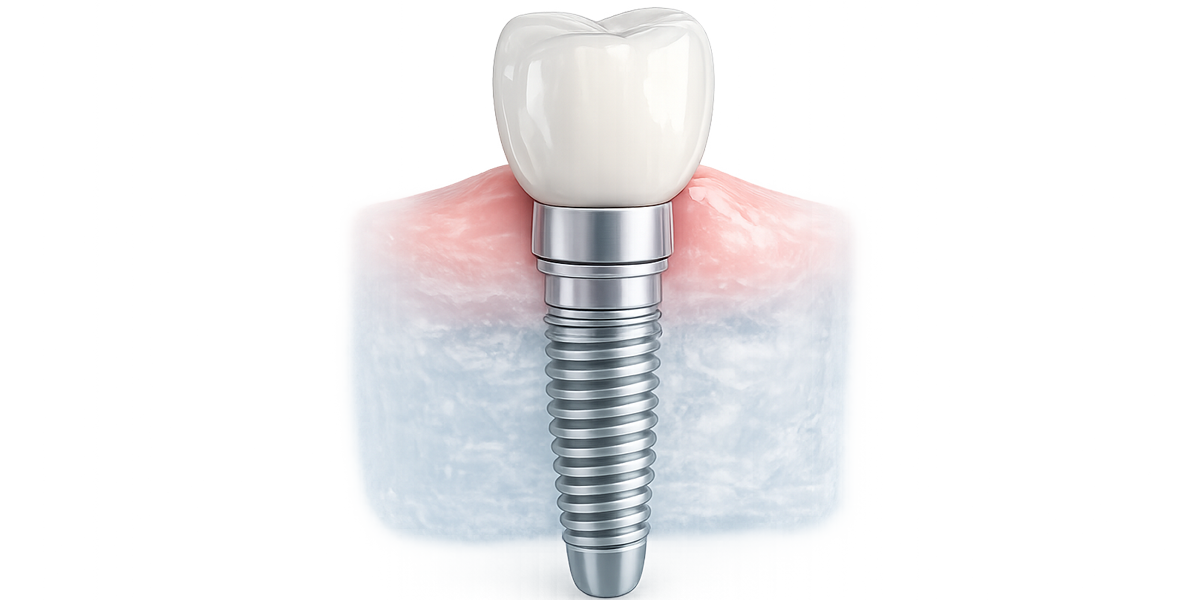
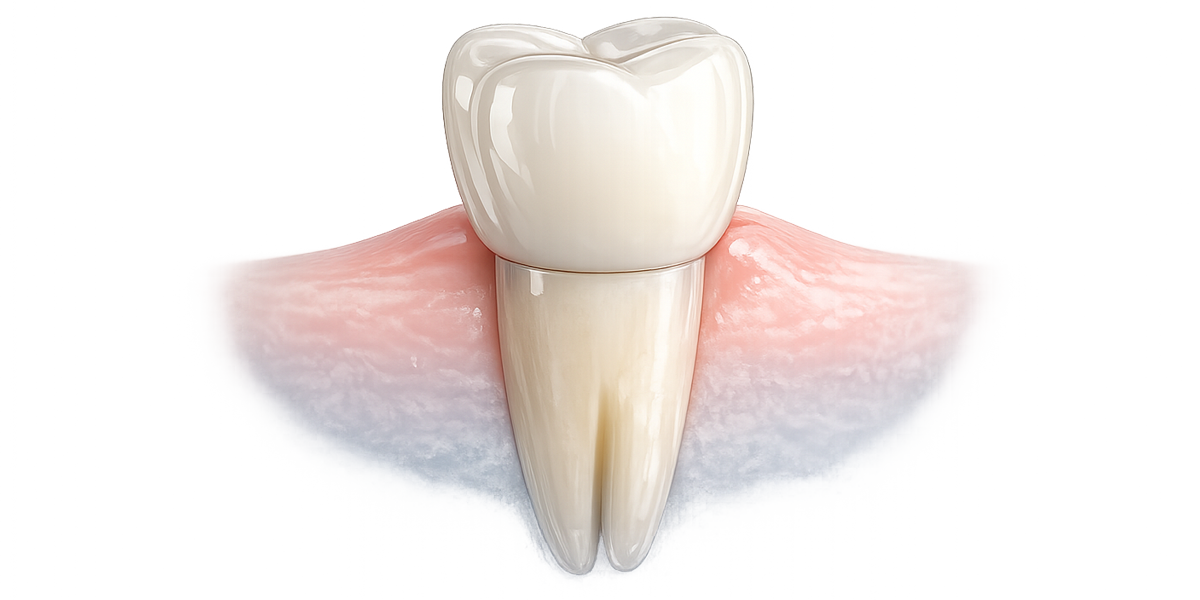
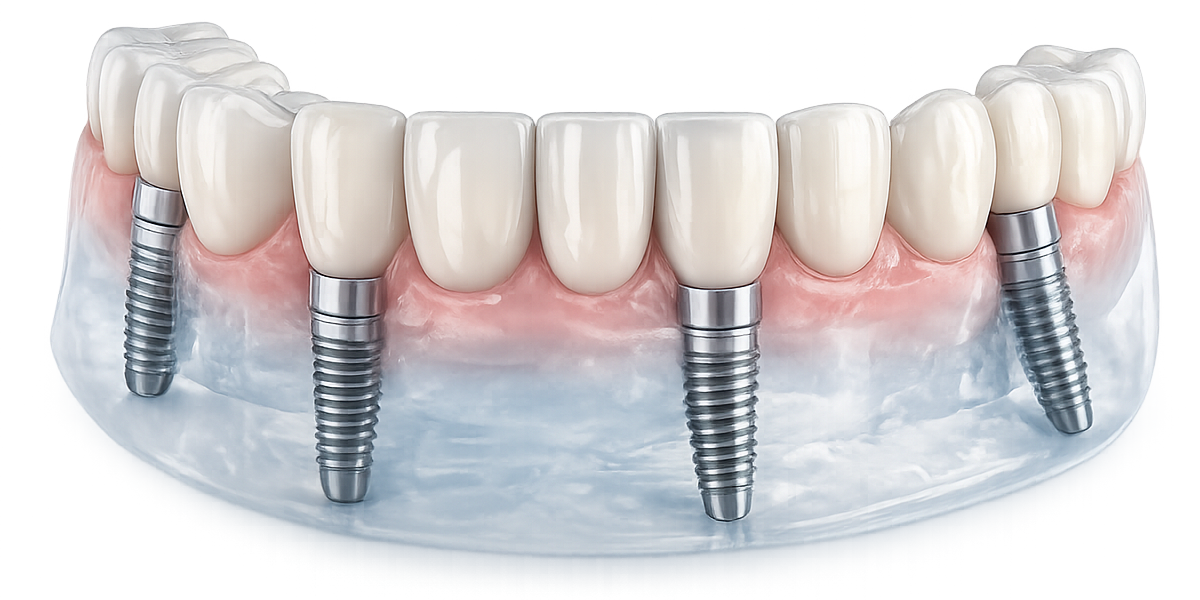
Dental implants are often used in modern dentistry. With the help of a dental implant, you can replace lost teeth or you can place fixed or removable dentures. Dental implants are artificial tooth roots made of titanium. The dentist inserts this root into the patient’s jawbone, then crowns and/or bridges can be placed on it in several ways.

The total cost of fixed teeth for full mouth dental implants consists of:

  • Dental implants and fixed dental crowns (Zirconia)
  • Medical consultation (examination, X-ray)
  • Bone grafting and sinus lift surgery (if necessary) 3D CT (CBCT) and stent (if needed)

Dental implant abroad costs are much more favorable than the cost of dental implants in the USA.

More information about dental implant costs

Our dental clinics work with the best implantation systems. Not only the brand (thus also the material) matters, but also the implantologist who carries out the intervention. The ratio between the value and the dental implant cost of the listed dental implant manufacturers is outstandingly high.

In the two-phase implantation (classic method), in the first phase, the dentist inserts the implant root partially into the patient’s jawbone and covers it with the gum. After a 3-6 month healing period, when the implant is rooted, the second phase follows. In this, the dentist places the dental implant abutment on the dental implant. Then he attaches a tooth crown/round bridge/bridge or removable implant-supported full denture to the dental implant abutments. Of course, the number of necessary dental implants depends on the number of gaps, on the patient’s bone structure, etc. There is also the method of the so-called immediate loading implantation, where the implantation and the placement of dentures are performed in one visit. The healing phase is not eliminated, but patients often receive a temporary fixed prosthesis immediately. You can find all the information on our ‘Immediate Loading of Dental Implants‘site. Learn about dental implants’ pros and cons, the timeline of tooth implantation, or how long do dental implants last

The difference between a ‘mini lift’ and ‘sinus lift‘ is just in the size of the transplant. This means that the mini lift is above one or two teeth, a sinus lift is in a quadrant, i.e. in half the jaw. Of course, dental bone grafting of any form is only necessary when the patient does not have enough bone substance in the jawbone for implantation.

For dental implant interventions dentists always apply local dental anesthesia. However, full anesthesia is only necessary when a patient is an anxiety patient and is not able to cooperate with the doctor during the implantation. Under full anesthesia, the patient does not realize anything, because they are in an unconscious state, which the anesthetist and assistant then monitor with various devices.

Of course, each dental clinic gives a guarantee on their work. Dental implant manufacturers usually give a warranty of 10 years on the implants, and dental clinics give a 5 warranty on the surgical procedure. You can protect yourself this way.

The costs for dental implants are generally not covered by statutory health insurance companies. At the same time, they support the dentures attached to the implant. The fixed amount is 60 percent of the basic pension. If a tooth is missing, a bridge is provided as part of the basic care. There are differences between the insurance companies. Private health insurance can even cover the costs of the entire treatment. In any case, you should contact your insurance company and check your contract.

Dental implant unit prices USA-Hungary

Treatment / Service

USA*

Hungary**

You save

Bredent dental implant

USA

2 420 $

Hungary

from 810 $

You save

67%

Nobel dental implant

USA

2 970 $

Hungary

from 1 090 $

You save

63%

Dental crown, zirconia

USA

690 $

Hungary

from 460 $

You save

52%

Sinuslift

USA

1 080 $

Hungary

from 580 $

You save

47%

Anesthesia

USA

1 450 $

Hungary

from 630 $

You save

56%

Quality

*Source: 2025 National Dental Advisory Service, Comprehensive Fee Report
**The prices are indicative, the treatment plan and quote is always prepared in €.

Free quote

Our dental implants abroad packages

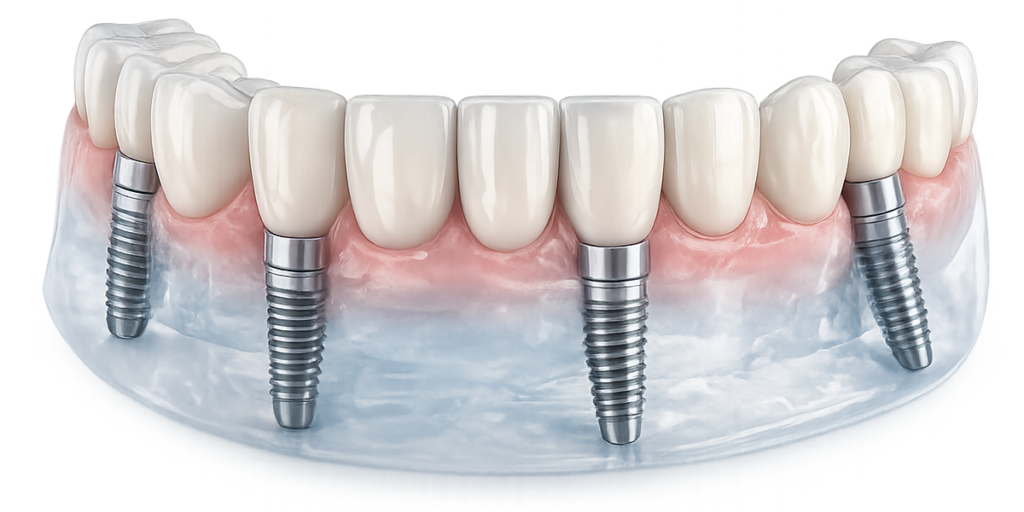
4 standard Swiss dental implants with 10 metal-ceramic crowns and fixed temporary bridges

  • Tooth extraction, if necessary, Surgical intervention, Medications – 4 immediately loaded dental implants insertion
  • Placement of the round bridge, Forming of the gingival, bite refinement & Check-up
  • Airport transfer on the day of your arrival and departure
  • Accommodation for 1 person for the duration of the treatments (maximum twice) in the hotel directly next to the clinic

7 590 $ /jaw*

All On 4 Package 600

4 standard Swiss dental implants with 10 zirconia crowns and fixed temporary bridges

  • Tooth extraction, if necessary, Surgical intervention, Medications – 4 immediately loaded dental implants insertion
  • Placement of the round bridge, Forming of the gingival, bite refinement & Check-up
  • Airport transfer on the day of your arrival and departure
  • Accommodation for 1 person for the duration of the treatments (maximum twice) in the hotel directly next to the clinic

8 740 $ /jaw*

All On 4 Package 600

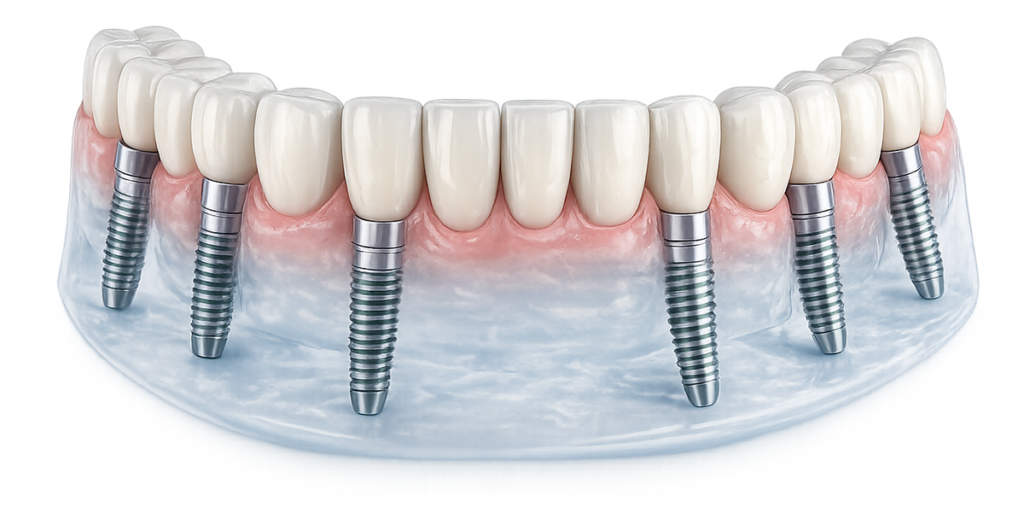
6 standard Swiss dental implants with 10 metal-ceramic crowns and fixed temporary bridges

  • Tooth extraction, if necessary, Surgical intervention, Medications – 4 immediately loaded dental implants insertion
  • Placement of the round bridge, Forming of the gingival, bite refinement & Check-up
  • Airport transfer on the day of your arrival and departure
  • Accommodation for 1 person for the duration of the treatments (maximum twice) in the hotel directly next to the clinic

9 200 $ /jaw*

All On 6 Package 600

*The packages price’s has no hidden costs,but if you need bone grafting or anesthesia, this is always an additional cost.

Dental Implant Costs FAQ

Make sure the treatment plan clearly distinguishes between surgery (implant placement), prosthetics (crown or bridge) and diagnostics (e.g. a 3D scan). Reputable providers explain each step in plain terms and specify whether temporary restorations, follow-up appointments and necessary medication are included.

A significant part of the final price lies in the laboratory-made restoration: precision of fit, the material used (e.g. zirconia versus metal-ceramic) and the work involved in fine-tuning the bite. A high-quality lab does not cut corners on materials, but works accurately, something you will notice later in comfort and long-term durability.

More implants do not automatically mean “linearly higher costs”. With a well-planned concept (for example, implants serving as support for a bridge), a stable solution can often be achieved without replacing every missing tooth with an individual implant. The cheapest option is not always the best, but good planning avoids unnecessary implants, and unnecessary expense.

In some cases, yes. A temporary restoration can provide function during the first days or weeks until the definitive solution is ready. The key is that the temporary prosthesis must not overload the implants and needs to be properly planned. This can make travel logistics easier, but it is not a “money-saving trick”, it is simply about choosing the right treatment sequence.

Typical cost pitfalls include additional diagnostics, temporary solutions, adjustments to the prosthetic work or minor soft-tissue procedures around the gums. The best approach is to ask for written clarification in advance about what happens if more treatment becomes necessary. A transparent “Plan B” saves both money and stress in the long run.

Many patients use staged treatment plans, dental insurance policies or a combination of both. A sensible approach is to prioritise the medically essential foundation first (implant placement plus a stable restoration), and consider aesthetic extras later. Step-by-step planning keeps decisions manageable and helps spread costs more comfortably.

Ideally, you should send a recent panoramic X-ray (OPG) or any existing 3D scans, along with brief information about medical conditions and current medication. If you already have a treatment and cost plan from the USA, even better. This allows the clinic to assess much more precisely what is necessary, and what is not.

Read dental implants before and after experiences from our patients and get to know our dental clinicsabout practical guidance of dental treatment costs.

-